The land we hold
Elk Creek
Watershed
Held in fee simple by Fertile Ground Conservancy since 2025. Deed restrictions recorded Del Norte County, April 2, 2025.
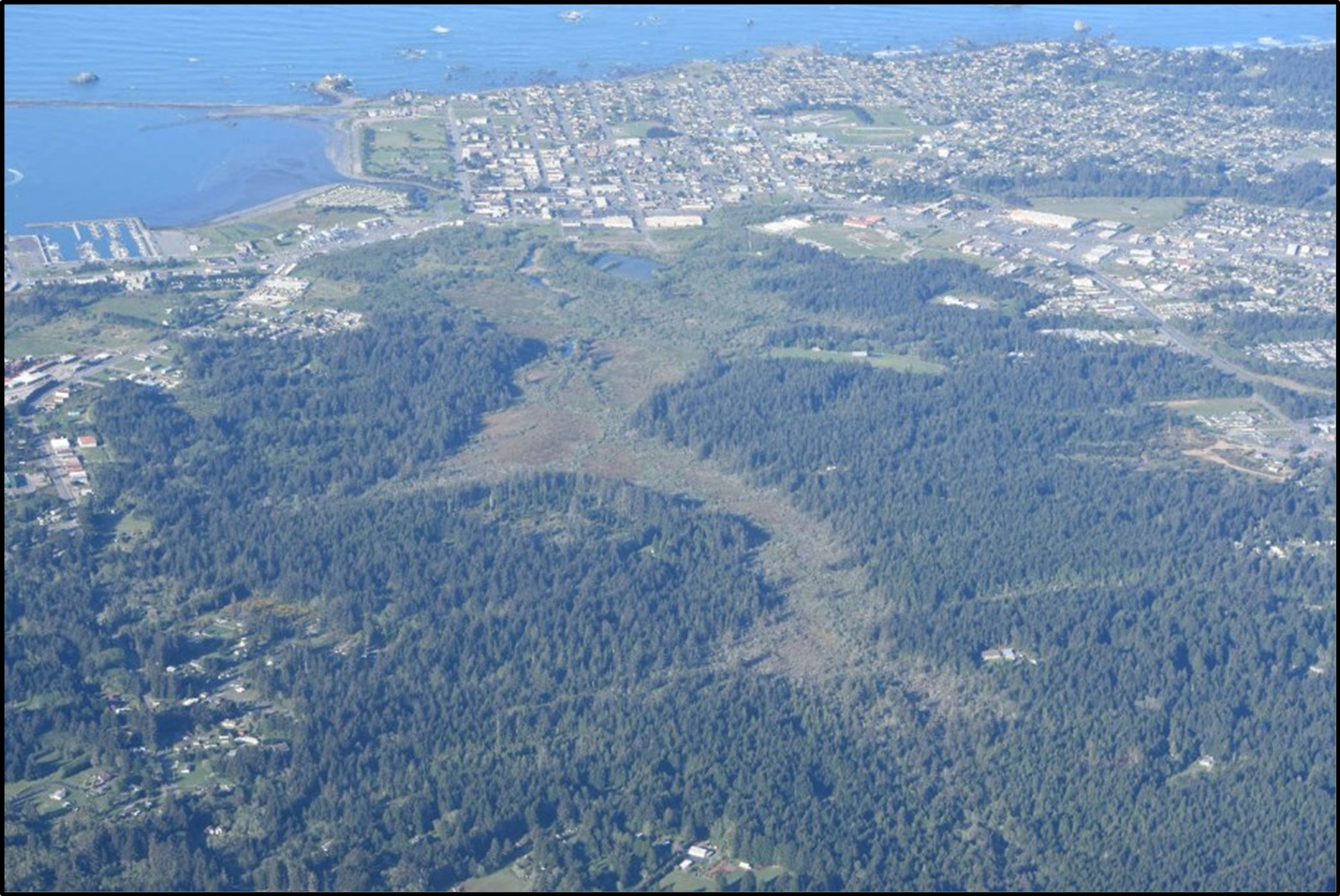
Photo: Justin Garwood
Elk Creek runs through the old-growth redwood country of Del Norte County, where the Klamath Mountains descend to meet the Pacific. This is one of the most biologically rich and least disturbed landscapes remaining in California — a refuge that has survived the logging era by circumstance more than by protection, and that now faces pressure from all sides.
Our 15-acre parcel sits within the lower Elk Creek watershed, in the riparian zone where the forest meets the water. This is the interface that matters most: the shaded creek banks that keep water temperatures cold enough for Coho salmon, the root systems that hold the soil against the current, the fallen logs that create the complex structure juvenile salmon need to survive their first winter.
We hold this land the way you hold a wound — with attention, with as much restraint as we can manage, and with the understanding that healing is something the body does, not something you do to it. Elk Creek is not sick because of anything that happened here. It is under pressure from what is happening everywhere around it. Our role is to keep that pressure off the wound long enough for the body's own processes to work.
Elk Creek is not a remote wilderness. It runs along the edge of a small California coastal town, through second-growth forest recovering from the logging era, past ridgelines where Port Orford cedar still stands on the steep ground that was too difficult to cut. It is a working watershed — pressed on all sides, asked to absorb more than it should.
And it is holding. Coho salmon still return here in the fall, navigating the same cold tributaries their ancestors navigated for thousands of years. A Spotted Owl hunts the old-growth pockets at night. The Pacific Giant salamander, which requires cold clean water and undisturbed streambed gravel, is still present — which means the creek is still doing what a creek is supposed to do.
These presences are not incidental. They are the measure of the place. As long as the salmon are returning and the salamander is here, Elk Creek is functioning as a community. Our job is to keep the wound from getting worse. The salmon returning, the salamander present in the gravel — these are signs the body is still functioning. They are what we are here to defend.
The Klamath-Siskiyou is one of the most biologically significant temperate landscapes on Earth — a center of endemism, an ice-age refugium, an intersection of ranges that produced plant and animal diversity found nowhere else on the continent. Elk Creek sits at its coastal margin, where the mountains meet the Pacific fog belt. The watershed is functioning. The beings that require intact, cold, forested creek habitat are still here. Our work is to keep the conditions that make that possible in place.
This land does not need management. It needs the injuries to stop. Our role is to hold the legal and financial infrastructure that keeps it out of harm's way — permanently, and regardless of what political or economic conditions follow.